In an era where fast fashion dominates the globe, the trend cycle for handbags seems to grow shorter by the day. Yet, certain bags have transcended decades—or even nearly a century—to remain at the very pinnacle of style. They are more than mere accessories; they are the crystallization of craftsmanship, history, and culture.
Today, let us step into the world of timeless classic handbags and explore the manufacturing secrets behind them.
I. What Are the Criteria for “Never Going Out of Style”?
For a bag to become an “eternal classic,” it must meet several stringent conditions:
• Gender-Neutral Design: No strong seasonal imprint; it does not chase the year’s trending color or popular elements.
• Impeccable Craftsmanship: Handmade by experienced artisans, with every stitch able to withstand scrutiny under a magnifying glass.
• Durable Materials: Rather than depreciating over time, it gains charm through the patina of age.
• Cultural Endorsement: Bestowed with meaning beyond the object itself by royalty, cinema icons, or historical events.
• Controlled Scarcity: The brand deliberately maintains a state of supply falling short of demand, making it a “wearable asset.”
II. In-Depth Analysis of Ten Classic Handbags
1. Hermès Birkin — The “Gold” of Handbags
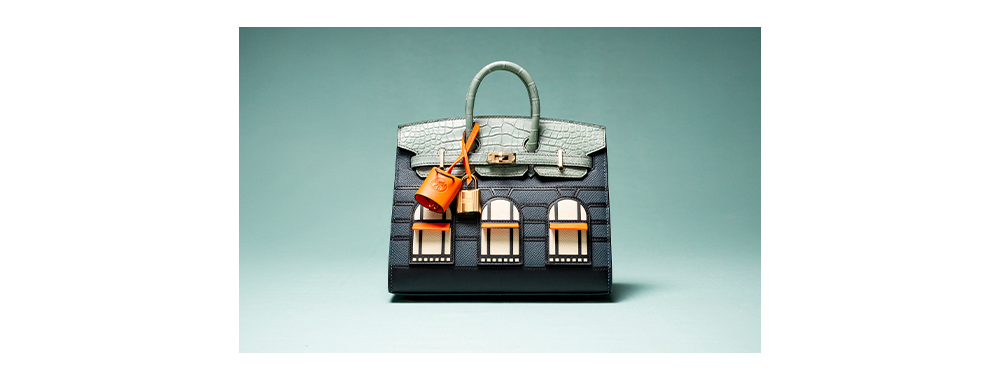
Year of Birth: 1984
Core Features: Double top handles, rotating lock, padlock, ultimate understated elegance with no visible logo.
Why It Is Timeless:
The Birkin is the only bag in the world whose average resale price exceeds its retail price, with premiums reaching 150%–250%. Hermès produces only a limited quantity annually, requiring long waiting lists or even “spending quotas” to purchase.
Manufacturing Secrets Revealed:
Each Birkin is independently hand-stitched by a single artisan for 18–24 hours, using the “Saddle Stitch”—a double-needle cross-stitching technique originating from 19th-century harness-making. Even if one thread breaks, the bag will not come apart. Artisans must undergo at least five years of training in the Hermès workshop before they are qualified to make a Birkin independently. Each bag is engraved with the artisan’s unique serial number inside and enjoys lifetime repair services.
2. Chanel Classic Flap — The Uniform of the Elegant Woman
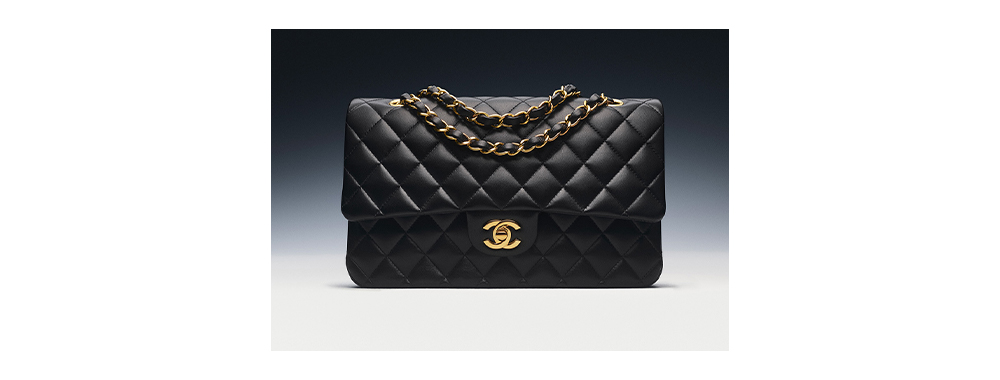
Year of Birth: 1955 (as the 2.55 version), redesigned as the Classic Flap by Karl Lagerfeld in 1983
Core Features: Diamond quilting, interwoven leather-and-metal chain strap, double-C turn-lock.
Why It Is Timeless:
Chanel’s strategy of raising prices by 15%–20% annually means that early purchases of the Classic Flap have an average resale value retention rate of 130%–140%. From Audrey Hepburn to modern street style, it has always been the standard accessory for elegant women.
Manufacturing Secrets Revealed:
The diamond quilting of the Classic Flap is inspired by jockeys’ riding jackets. Creating one requires over 180 steps, including:
• Selecting top-grade calfskin or lambskin, treated with special tanning processes.
• Each diamond quilt is hand-padded with thin cotton to ensure consistent plumpness.
• The chain strap is interwoven with metal and leather, with its weight precisely calculated to ensure comfortable wear.
Chanel owns multiple workshops (Ateliers) in France. The Lognon Pleating House on the outskirts of Paris specifically produces the iconic diamond-quilted leather for the Classic Flap.
3. Louis Vuitton Speedy — A Legend Unchanged for Nearly a Century
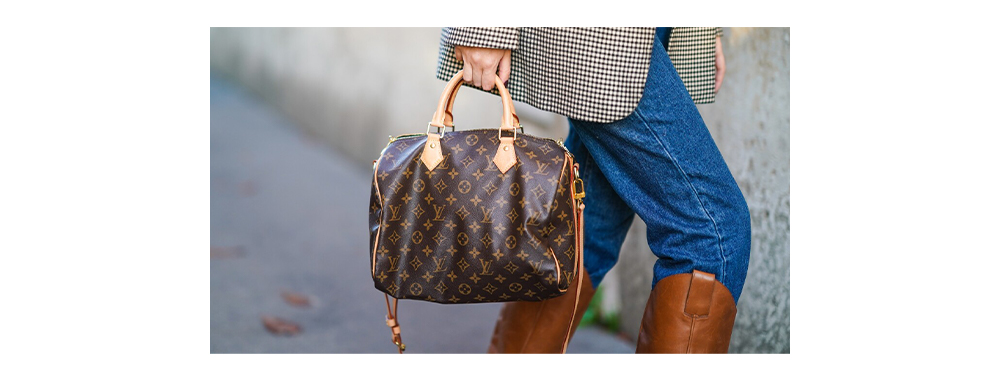
Year of Birth: 1930s (originally named the Express)
Core Features: Monogram canvas, natural cowhide trim, cylindrical Boston bag silhouette.
Why It Is Timeless:
It is one of the very few bags to maintain its original design for nearly a century. The canvas material is more wear-resistant than leather, and its relatively accessible price makes it the top choice for a “first luxury bag.”
Manufacturing Secrets Revealed:
The core of the Speedy lies in LV’s Monogram canvas—this coated canvas was invented by brand founder Louis Vuitton in 1896. It is waterproof, scratch-resistant, and highly durable. The natural cowhide trim (Vachetta Leather) oxidizes over time, gradually shifting from a light beige to a deep honey tone (Patina). This “mark of time” has become a coveted characteristic among collectors.
LV operates 16 owned workshops worldwide. The historic workshop in Asnières, France, has been in operation since 1859 and still provides handcrafting services for classic models like the Speedy.
4. Dior Lady Dior — The Eternal Elegance of Princess Diana

Year of Birth: 1995 (originally named Chouchou, renamed after Princess Diana)
Core Features: Cannage quilted pattern, structured and boxy silhouette, D.I.O.R. letter charms.
Why It Is Timeless:
It earned its “royal seal of approval” through Princess Diana’s frequent use. The Cannage pattern is inspired by the chairs of Napoleon III, which were also the seats at Dior’s first fashion show in 1947.
Manufacturing Secrets Revealed:
Creating a Lady Dior requires over 800 steps. The Cannage pattern demands that artisans emboss and stitch the leather with extreme precision, ensuring every diamond is exactly the same size. The bag’s rigidity comes from a special internal structural support; this “architectural feel” is the core element that distinguishes the Lady Dior from soft leather bags.
Dior has dedicated leather workshops in Italy, collaborating with top-tier leather suppliers to ensure that every piece of leather meets the brand’s stringent standards for grain, thickness, and suppleness.
5. Gucci Jackie 1961 — The Soul of Bohemia
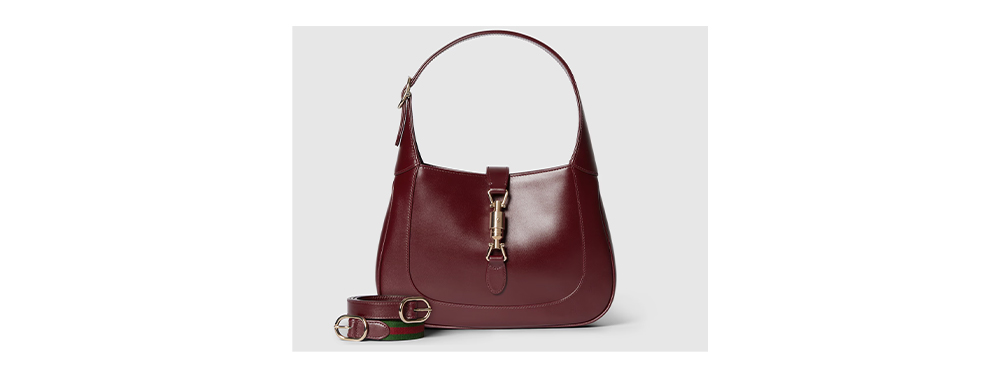
Year of Birth: 1950s (renamed in 1961 after Jacqueline Kennedy)
Core Features: Half-moon Hobo shape, piston closure, red-and-green web detail.
Why It Is Timeless:
It has undergone three major reissues (1999, 2009, and 2020), each triggering a buying frenzy. It is the originator of the “underarm bag.”
Manufacturing Secrets Revealed:
The curved silhouette of the Jackie 1961 requires artisans to manually adjust leather tension during stitching to ensure a smooth, wrinkle-free body. The piston closure is made of brass and undergoes a special aging treatment to achieve a vintage look. Gucci’s Gucci ArtLab in Florence is the brand’s largest craftsmanship center, dedicated to the research and production of classic leather goods.
6. Prada Galleria — The Power Symbol of the Working Woman
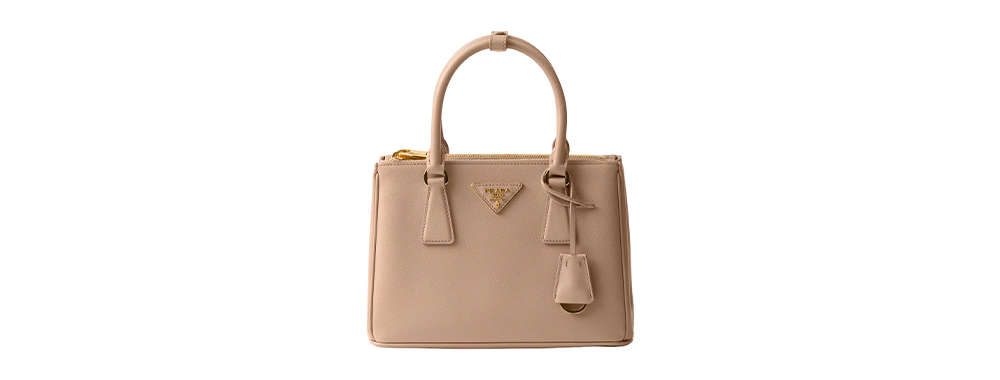
Year of Birth: Named after Milan’s Galleria Vittorio Emanuele II
Core Features: Saffiano crosshatch leather, architectural trapezoidal silhouette, double top handles.
Why It Is Timeless:
It exploded in popularity after being carried by the “female assassin” Mona in Mission: Impossible – Ghost Protocol, earning it the nickname “The Killer Bag.” The functional aesthetics of Saffiano leather have made it a power symbol for professional women.
Manufacturing Secrets Revealed:
Saffiano leather is a patented leather invented by Mario Prada in the early 20th century. It is produced by heat-embossing a crosshatch pattern and coating it with a special finish, giving it exceptional scratch and water resistance. This leather remains one of Prada’s core competitive advantages to this day.
Prada owns the Pelleteria workshop in Tuscany, Italy. From leather tanning to final stitching, the entire process is self-controlled, ensuring that every Galleria meets museum-collection-level quality.
7. Fendi Baguette — The First “It Bag”
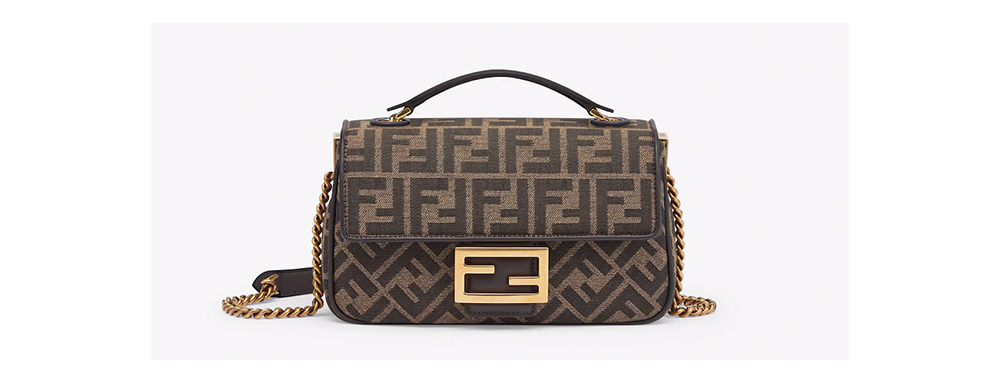
Year of Birth: 1997 (designed by Silvia Venturini Fendi)
Core Features: Long, flat body, FF metal clasp, short shoulder strap.
Why It Is Timeless:
Carrie Bradshaw’s iconic line in Sex and the City—”It’s not a bag, it’s a Baguette!”—made it the first true “It Bag” in history.
Manufacturing Secrets Revealed:
The essence of the Baguette lies in its proportions—the golden ratio of the bag’s length, width, and strap length is precisely calculated to ensure it fits perfectly under the arm. Fendi’s handmade workshop at the Palazzo Fendi headquarters in Rome ensures that every Baguette is hand-stitched by senior artisans. Special versions featuring sequins or embroidery require hundreds of hours of meticulous work.
8. Celine Luggage Tote — The Smile of Minimalism
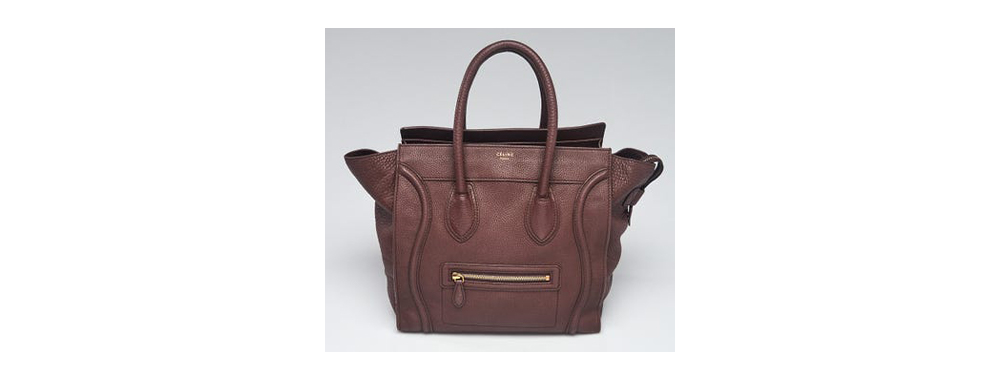
Year of Birth: 2010 (designed by Phoebe Philo)
Core Features: Front “wavy” zippered pocket (shaped like a smile), expandable “wings” on the sides.
Why It Is Timeless:
Phoebe Philo’s era at Celine defined the “normcore” aesthetic. The Luggage Tote bears no obvious timestamp; its avant-garde nature lies in its structure rather than its decoration.
Manufacturing Secrets Revealed:
The “smile” pocket requires artisans to hand-cut and stitch the curved edges, ensuring the zipper runs smoothly and the shape is symmetrical. The side “wings” are secured with hidden magnetic snaps; when expanded, the capacity increases by 40%. Celine operates multiple partner workshops in Italy, specializing in structurally complex bags.
9. Saint Laurent Sac de Jour — The Cool of Paris

Year of Birth: 2013 (designed by Hedi Slimane)
Core Features: Japanese-minimalist rectangular silhouette, side gusset structure, minimal YSL lettering.
Why It Is Timeless:
Known as the “Lawyer Bag” or “Editor Bag,” it is beloved by professional women for its ability to hold A4 documents and laptops. In the era of “quiet luxury,” its “de-logoed” design has become increasingly precious.
Manufacturing Secrets Revealed:
The gusset structure of the Sac de Jour requires leather with an exceptional balance of flexibility and stiffness—too soft and it loses its shape; too stiff and it cannot expand. Saint Laurent selects top-grade calfskin, treated with special tanning processes to ensure the gussets retain their original form even after repeated opening and closing.
10. Loewe Puzzle — Wearable Architecture
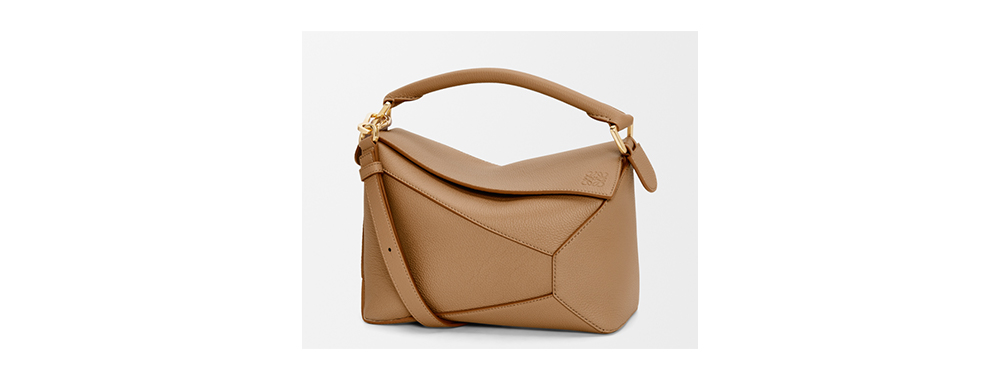
Year of Birth: 2015 (designed by Jonathan Anderson)
Core Features: Geometric patchwork structure, cuboid folding shape, five ways to wear.
Why It Is Timeless:
As the youngest entry on this list, the Puzzle has joined the ranks of classics in just ten years. It proves that modern design can also become timeless—the key lies in craft innovation rather than trend-chasing.
Manufacturing Secrets Revealed:
The Puzzle is assembled from over 40 pieces of leather in different shapes, with cutting precision required at the millimeter level. Jonathan Anderson collaborated with Loewe’s Casa Loewe workshop in Madrid to develop special stitching techniques that ensure the geometric structure does not deform when transformed into different carrying styles. The Spanish Nappa calfskin used is vegetable-tanned, with a buttery-soft touch.
III. The Manufacturing Models Behind Classic Handbags
The birth of these legendary bags is inseparable from the support of top-tier handbag manufacturers. Luxury brands typically employ two production models:
1. In-House Atelier Model
Representative Brands: Hermès, Chanel, LV
Characteristics: Complete autonomous control over the production process; artisans are exclusive brand employees who undergo long-term training.
Advantages: Extremely high consistency in quality and stable transmission of craftsmanship heritage.
2. Italian Manufacturing District Model
Representative Regions: Tuscany and Marche, Italy
Characteristics: Luxury brands collaborate with family-run leather workshops, which may simultaneously serve multiple top-tier brands.
Advantages: A convergence of the world’s finest leather craftsmanship, creating industrial synergy.
For example, Prada’s Pelleteria workshop, Bottega Veneta’s Vicenza workshop, and numerous small Italian family workshops that provide leather accessories for Chanel and Dior are all guardians of the “Made in Italy” gold standard.
IV. The “New Classics”: How Do Classics Evolve in the Contemporary Era?
Classics are not static. Over the past five years, we have observed three trends for “new classics”:
1. Architectural Structure + Innovative Materials — For example, the geometric facets of the Loewe Puzzle or BV’s woven leather. They speak of “durability and uniqueness” in an entirely new language.
2. Vintage Reissues — Coach reissuing classic styles, the Chloé Edith making a comeback, Prada re-promoting nylon totes. When young people buy “reissues,” they are essentially still searching for timeless bags.
3. Relaxed, Worn-In Aesthetic — Jane Birkin’s own worn Birkin selling for a sky-high price at auction proves that “experience itself is style.” “Classic” does not mean refusing change; it means proving the same truth again and again through the aesthetics of different eras: Premium materials + precise pattern-making + inheritable craftsmanship are the true code for a bag to transcend time.
V. From the Production Floor: How Is a “Never Out of Style” Handbag Actually Made?
In this section, we answer readers’ most pressing questions from a factory perspective: What exactly makes those truly worth-buying bags so good?
1. Leather Grade Determines the Starting Point
• Full-Grain Leather — Retains natural texture; the more it is used, the more lustrous and captivating it becomes. It is the leather of choice for “never out of style handbags.”
• Top-Grain Leather — The surface is lightly sanded for higher uniformity and excellent value for money.
• Split Leather / PU-Coated Leather — More suitable for fast fashion or low-price product lines; it is difficult to uphold the promise of “a decade of companionship.”
2. Hardware — Luxury Lies in the Details
Solid brass or high-quality alloy with multi-layer plating is the hardware solution that classic styles must adopt. A bag priced at thousands of dollars cannot be called a “classic” if its zipper pull fades within a year.
3. Stitching & Edge Paint — Craftsmanship Visible to the Naked Eye
• Stitch density is maintained at 8–10 stitches per inch, with straight lines and no duplicate needle drops.
• Edge paint is smooth, crack-free, and bubble-free; a double-layer edge-coating process is standard.
Conclusion
In this age of chasing the new, classic handbags teach us one truth: True luxury lies not in chasing trends, but in possessing the composure to transcend time. A Birkin can be used for thirty years; a Speedy can be passed down through generations—they are not merely bags, but witnesses to craftsmanship, history, and personal style.
When you pick up a classic handbag, what you touch is not merely leather, but decades or even centuries of inherited artisanal dedication. That is why they will never go out of style.