1. What Is the Hardware Electroplating Process?
Simply put, the hardware electroplating process is a surface treatment technology that uses the principle of electrolysis to deposit a thin and firmly bonded layer of metal or alloy onto the surface of hardware substrates, in order to achieve corrosion resistance, wear resistance, aesthetic enhancement, and other purposes.
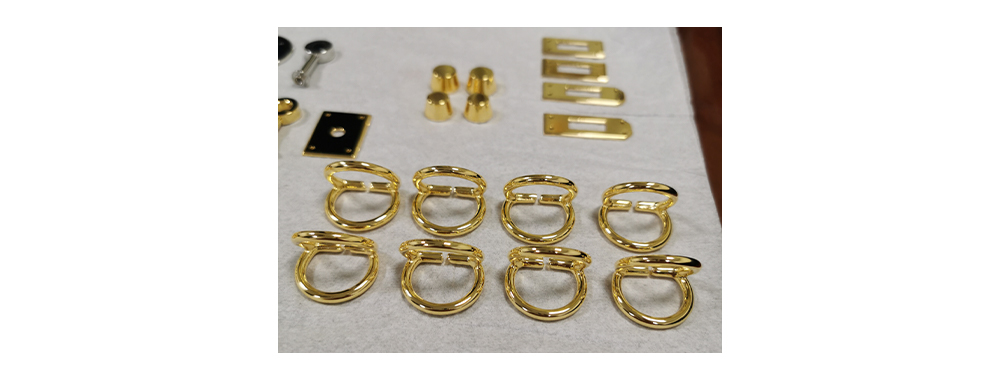
Its process flow can be broken down into three closely interconnected stages:
- Pre-plating Treatment: This is the key step that determines the success or failure of the electroplating process. The purpose is to thoroughly remove oil, rust, and oxide layers from the surface of the hardware components, allowing the plating layer to adhere firmly and tightly.
- Electroplating Treatment: The pre-treated hardware components are placed into an electroplating tank, where they serve as the cathode and are immersed in an electrolyte containing ions of the metal to be plated, together with the metal to be plated serving as the anode. When direct current is applied, the metal ions in the plating solution gain electrons at the surface of the hardware components and are reduced to metal atoms, which gradually deposit to form the plating layer.
- Post-plating Treatment: After electroplating is completed, additional steps such as cleaning, passivation, and drying are required. Among these, passivation treatment can form a dense oxide film on the surface of the plating layer, effectively improving its corrosion resistance.
2. The Two Main Process Routes: Rack Plating vs. Barrel Plating
In the actual production of a handbag factory, the choice of electroplating method directly determines the upper limit of hardware quality and the cost per item. The mainstream process routes are divided into two
- Rack Plating — The Choice for Quality
During the process, each hardware component is individually suspended on a conductive rack to ensure an even distribution of electrical current, resulting in a plating layer that is evenly deposited, smooth, and uniform. All high-end hardware components that require a mirror-like high-gloss finish, rich and full color, and clearly defined edges—such as clasps, decorative plates, and the front surfaces of zipper pulls—use this process. Its main advantage is its extremely high quality ceiling, but the output per batch is relatively limited, resulting in higher costs.
- Barrel Plating — The Choice for Efficiency
A large quantity of small hardware components is placed into a rotating barrel, where electroplating is completed as the components tumble inside. Its key characteristics are high batch output and low marginal cost. However, because the parts collide with one another during the process, the surface finish and edge definition cannot match those achieved through rack plating. It is typically used for hardware components located inside bags or for structural components that are subject to mechanical stress.
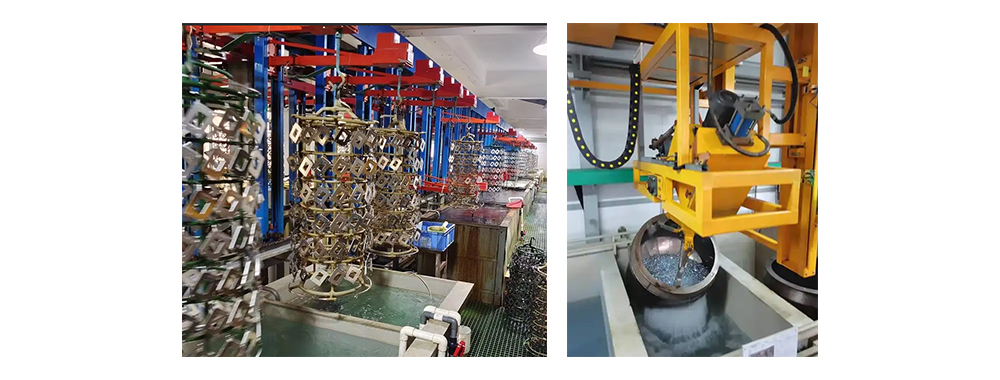
For a mature handbag manufacturer, the two processes are often combined and scheduled according to the category, position, and decorative requirements of the hardware components specified in the design drawings, in order to achieve the optimal balance between quality and cost.
3. Selection of Base Materials
The electroplating performance and service life of hardware components depend not only on the electroplating process itself, but are also closely related to the base material. In handbag hardware manufacturing, the three most common base materials are zinc alloy, copper alloy, and stainless steel, each with different physical properties and suitability for electroplating.
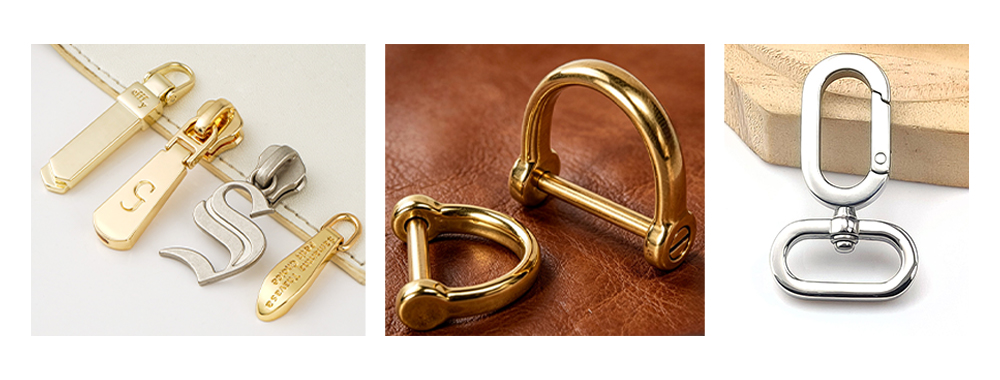
- Zinc Alloy (Zamak): Due to its excellent fluidity and die-casting performance, zinc alloy has become the preferred material for most bag hardware components. It is particularly suitable for decorative components with complex shapes and rich details, such as three-dimensional logo plates, irregularly shaped clasps, or zipper pulls featuring intricate relief designs.
- Copper Alloy (such as H65 brass): With excellent electrical conductivity and good ductility, copper alloy can easily achieve a high-gloss surface finish and is commonly used for components with higher requirements for texture and appearance, such as zipper pulls and chain links
Copper alloy itself has a certain degree of corrosion resistance and offers good compatibility with commonly used plating layers such as nickel and chromium. Complex base-coating layers can usually be omitted, allowing bright nickel or decorative chromium electroplating to be applied directly. As a result, the overall process route is relatively straightforward.
- Stainless Steel: Stainless steel naturally has a passive film on its surface and offers the best corrosion resistance among the three materials. However, its disadvantages include greater processing difficulty, limitations in shape and design, and higher cost. It is therefore primarily used for functional load-bearing components in luggage and outdoor backpacks.
4. Materials and Thickness of the Electroplated Layer
Regarding the material and thickness of electroplated layers, there are relatively clear distinctions based on industry standards and quality grades.
4.1 Materials of the Electroplated Layer
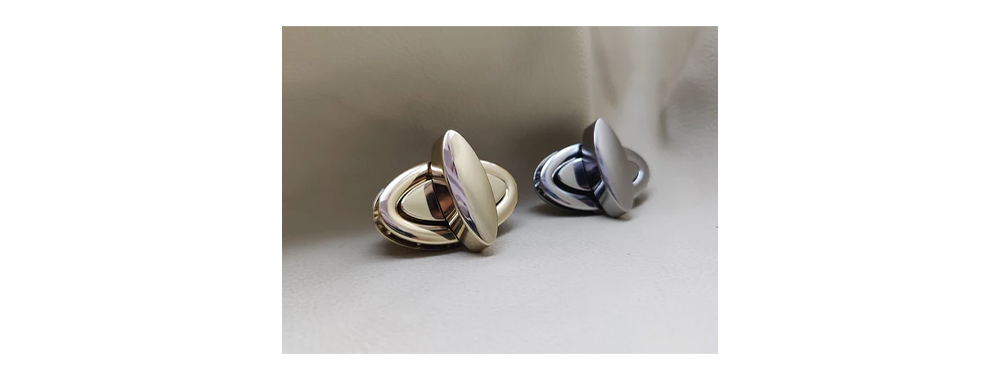
The material of the electroplated layer directly determines the color, gloss, and corrosion resistance of the hardware components. A common material combination consists of a “base layer + surface layer” structure. For some high-end customized products, a barrier layer and protective layer may also be added.
- Base Layer (for initial plating): Usually copper or nickel. Their purpose is to make the surface of the base material smoother and enhance the adhesion of the surface metal layer.
- Barrier Layer (Optional): For certain high-requirement products, a layer of bright nickel or semi-bright nickel may be added to further improve surface smoothness, delay the penetration of corrosive media, and provide a more uniform deposition base for the surface layer.
- Surface Layer (Decorative / Functional Layer): This is the outermost metal layer and determines the final color that we see. Common materials include:
- Chrome: Produces a high-gloss, mirror-like finish and offers excellent wear resistance.
- Gold: Used for hardware components designed to convey a luxurious appearance and can be available in different karat gold shades.
- Nickel: Can provide a variety of finishes, including bright, matte, and black effects.
- Palladium: Has a silver-white tone similar to platinum, with a soft color and excellent stability. It offers better corrosion resistance than conventional nickel plating and is commonly used for high-end handbag hardware or applications with low-allergen requirements. Due to its higher cost, it is more commonly found in customized components for luxury brands.
- Zinc: Relatively low in cost and offers good corrosion protection. However, zinc plating has relatively low hardness and limited wear resistance, so it is commonly used for internal structural components where decorative requirements are not high but basic rust protection is needed.
In addition, to meet diverse design requirements, the industry has developed various composite plating layers and special-effect processes, such as black chrome, gunmetal, and rose gold. Essentially, these effects are achieved by controlling the composition of the plating solution, current density, or post-treatment methods (such as electrolytic coloring and sealing treatment) on the basis of the underlying metal plating layer to achieve specific colors and textures.
- Protective Layer (Optional): For certain high-end or special-purpose hardware components, a transparent organic coating may be applied over the surface layer to further isolate the metal from exposure to air, perspiration, or chemical substances. This is particularly suitable for light-colored plating layers or materials that are prone to oxidation. The coating is extremely thin and transparent, so it does not affect the original metallic appearance or texture, while significantly extending the service life of the electroplated components.
It should be noted that electrochemical compatibility between different materials is crucial. For example, if the base layer is copper and the surface layer is nickel, a potential difference may cause a galvanic cell reaction in a humid environment, which could instead accelerate corrosion. Therefore, a mature electroplating solution needs to take into comprehensive consideration the standard electrode potentials, coefficients of thermal expansion, and environmental exposure conditions of the metals in each layer, and avoid such risks through appropriate material combinations and process control.
4.2 Thickness of the Electroplated Layer
The thickness of an electroplated layer is usually measured in micrometers (μm). Industry standards such as ISO 9227 / ASTM B117 specify clear thickness requirements for different types of plating.
| Layer | Material | Typical Thickness | Function |
| Strike Layer | Copper or Nickel | 0.5–2 μm | Enhances adhesion to the base material and fills microscopic surface defects |
| Barrier Layer | Nickel | 1–3 μm | Prevents the migration of metal ions from the base material and provides the primary corrosion protection |
| Decorative Layer (Color) | Gold / Palladium / Chrome / Imitation Gold | 0.1–3 μm | Provides the desired appearance, color, and gloss |
| Protective Layer (Top Coat) | Clear Lacquer / Nano-Ceramic | 5–15 μm | Seals the entire system and protects against perspiration, scratches, and oxidation |
One very important fact is that the primary purpose of an electroplated layer is to provide protection and decoration for hardware components, but it is not permanent. Friction and impact during daily use, as well as contact with perspiration, perfume, and other substances, can gradually cause the plating layer to wear, oxidize, or even fade. Even luxury brands such as Hermès and Louis Vuitton cannot completely avoid this. The difference is that their manufacturing processes and plating quality are generally better, so even after some fading occurs, the hardware tends to retain a relatively more refined appearance and feel.
In addition, some high-end or luxury brands with extremely high requirements for durability and appearance may not use conventional electroplating. Instead, they may adopt PVD (Physical Vapor Deposition) vacuum coating technology. Coatings produced through this process, such as titanium nitride, have hardness far exceeding that of conventional electroplated layers. Their salt spray test performance can reach 500–800 hours, while their wear resistance and color retention are several grades higher.

5. Conventional Electroplating vs. PVD Vacuum Plating
When brands place extremely high demands on the wear resistance and color retention of hardware components, traditional wet electroplating will gradually reach its performance ceiling. At this point, an increasing number of high-end handbag OEM manufacturers are beginning to adopt PVD (Physical Vapor Deposition) vacuum coating as an alternative solution.
The fundamental difference between the two lies in their film-forming mechanisms:
- Conventional Electroplating is a chemical wet process in which metal deposition is completed in an electrolytic solution. Its coating hardness is typically around HV 200–300, with a salt spray test resistance of approximately 16–48 hours. This is sufficient for mid-range bags, but there is still a risk of oxidation with prolonged use.
- PVD Vacuum Plating is a physical dry process in which metal ions are accelerated and bombarded onto the surface of the workpiece in a high-vacuum environment, forming a hardened layer with atomic-level bonding. Its coating hardness can reach HV 800–1800, while salt spray test resistance can reach 48–800 hours, and color retention can be extended to 3–5 years.
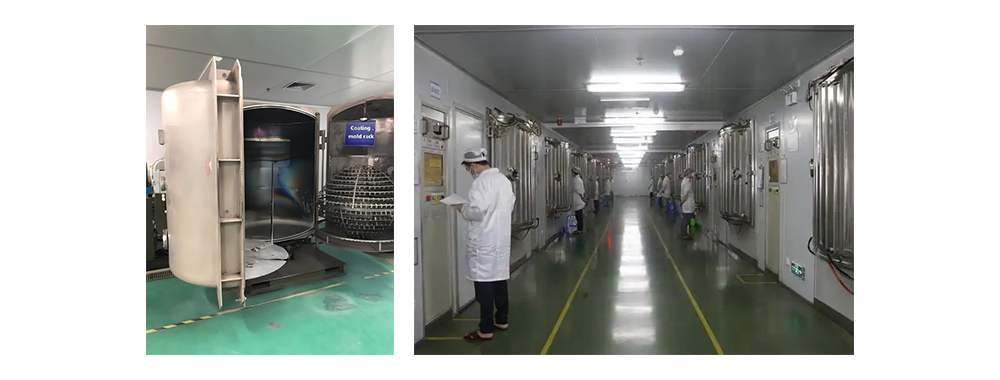
Based on the differences in their performance profiles, the two processes have established a clear hierarchy of applications within the industry: conventional electroplating is used for mass-market consumer products with the largest circulation volumes, while PVD vacuum plating is widely adopted across the core hardware supply chains of luxury brands such as Hermès and Louis Vuitton.
6. Practical Recommendations for Buyers
When communicating with a handbag OEM factory about hardware finishing processes, it is recommended to clarify requirements from the following two dimensions:
6.1 Define the Positioning
Evaluate whether the hardware component is an exterior decorative component or an internal functional component.
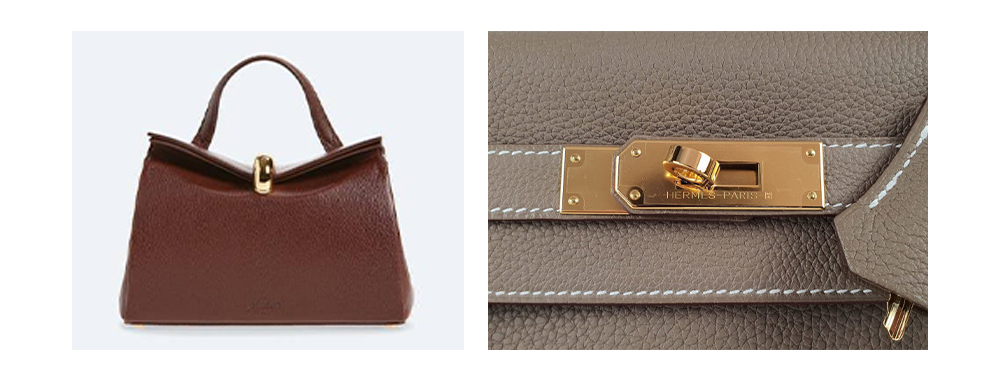
- If it is an exterior decorative component (such as a logo plate, the front surface of a zipper pull, or an exposed magnetic snap surface), its visual appeal and long-term color retention directly affect consumers’ perception of the product’s quality and grade. Priority should therefore be given to rack plating, with highly stable surface materials such as nickel, palladium, or gold. Where necessary, an additional protective coating can be applied, or PVD vacuum plating can be specified directly.
- If it is an internal functional component (such as rivets, recessed rings, or strap adjustment hardware), greater emphasis can be placed on cost control and basic protection. Barrel plating combined with zinc or a basic nickel layer is generally sufficient to meet functional requirements.
6.2 Define the Testing Standards
If the product has specific rust-prevention requirements, do not simply say, “A salt spray test is required” when communicating with the factory. Instead, clearly specify the required test duration, such as “no corrosion after 48 hours.” This will directly guide the factory in selecting the appropriate plating material and thickness.
7. Frequently Asked Questions (FAQ) About Hardware Electroplating Processes
Q1: How can I quickly determine whether the electroplating quality of a hardware component is good?
A preliminary assessment can be made from three intuitive perspectives:
- Look: Observe the surface under sufficient lighting. A high-quality plating layer should have uniform color and a high level of surface smoothness, with no obvious pitting, blistering, yellow stains, or water marks. The edges and corners should not appear whitish or show exposed base material.
- Touch: Gently run your fingers over the surface. A high-quality plating layer should feel smooth and refined, without burrs, a grainy texture, or roughness. The tactile feel can also reflect the uniformity and smoothness of the plating layer.
- Test: A more rigorous approach is to conduct a salt spray test (to evaluate corrosion resistance) and a cross-hatch test (to evaluate plating adhesion using the cross-cut method). Conventional electroplated hardware should generally pass a salt spray test of 24–48 hours, while PVD vacuum plating can reach 48–800 hours.
Q2: Why do hardware components in different positions on the same bag sometimes have slightly different gloss and texture?
This is a normal and reasonable division of manufacturing processes. A handbag usually contains various types of hardware, and different electroplating methods are selected according to their functional positioning and size:
- Exterior decorative components (such as clasps, decorative plates, and the front surfaces of zipper pulls): Rack plating is used to achieve an exceptionally high-gloss and smooth appearance.
- Internal functional components or small accessories (such as small D-rings, strap buckles, and small rivets): Barrel plating is used to ensure basic corrosion protection while controlling costs.
Therefore, slight differences in texture among different hardware components on the same handbag are often an inevitable result of process specialization rather than a quality defect.
Q3: What are the main factors that determine electroplating costs?
The unit cost of electroplating is determined by multiple factors, including:
- Process route: Rack plating cost > barrel plating cost. PVD vacuum plating cost > conventional wet electroplating cost.
- Plating material and thickness: Precious-metal plating such as gold and chrome, as well as functional plating layers, generally cost more. The thicker the plating layer, the longer the processing time and the higher the corresponding cost.
- Base material: Different base materials, such as zinc alloy, copper, iron, and stainless steel, have different levels of difficulty in pre-treatment and different electroplating process requirements.
- Environmental compliance costs: A properly regulated factory needs to invest in wastewater and exhaust treatment facilities, and these costs are allocated into the processing fees.
- Yield and scrap rate: The higher the appearance requirements for hardware components, the more difficult it is to control the yield rate, and the cost of defective and scrapped parts will also be reflected in the final unit price.
Q4: For hardware accessories on high-end bags, which material is better: zinc alloy or brass?
A: Brass generally offers better durability and a more premium positioning, while zinc alloy provides greater design flexibility and lower production costs.
Q5: What do environmental certifications such as RoHS and REACH mean?
- RoHS (Restriction of Hazardous Substances Directive): Primarily restricts the content of hazardous substances such as lead, mercury, cadmium, and hexavalent chromium. It is an important market-access requirement for entering European and U.S. markets.
- REACH (Registration, Evaluation, Authorisation and Restriction of Chemicals): An EU regulation governing the control of chemicals. It covers a broader range of substances and imposes more comprehensive requirements.
If a handbag brand plans to export to European and U.S. markets, its electroplated hardware must comply with these environmental standards. A reputable handbag OEM factory should be able to cooperate with the brand in conducting the relevant testing and provide compliance reports.
Q6: Why do some electroplated hardware components develop “color fading” or turn black after being used for a period of time?
This is usually caused by the following factors:
- The plating layer is too thin or its structure is unreasonable (such as the absence of a barrier layer), allowing corrosive media to quickly penetrate to the base material.
- Insufficient pre-treatment of the base material: Residual oil, grease, or oxides can affect the adhesion of the plating layer.
- The usage environment exceeds the resistance range of the plating layer: For example, prolonged exposure to perspiration, perfume, seawater, or high-humidity/high-salt environments can accelerate electrochemical corrosion.
- Insufficient stability of the plating material itself: For example, low-purity imitation-gold plating can oxidize and become darker easily, while zinc alloy substrates may develop “white rust” in humid environments.
- Insufficient post-treatment: If passivation or a protective coating is not applied, the plating layer is directly exposed to air.
It is worth noting that “color fading” is not always a process defect. Some designers intentionally use antique-style electroplating or thin plating layers to create a vintage effect. However, such designs should be clearly communicated to the factory in advance and specified in the technical documentation to avoid confusion with genuine quality issues.
Q7: Is a thicker plating layer always better?
Not necessarily. The relationship between plating thickness and performance is not simply a linear positive correlation. The thickness should be selected rationally according to the application requirements:
- Within a certain thickness range, increasing the thickness can indeed improve corrosion resistance and wear resistance (for example, increasing a nickel layer from 5 μm to 10 μm).
- However, once the thickness exceeds a critical level, increased internal stress in the plating layer can increase brittleness, potentially causing the layer to crack or peel off when bent or subjected to impact.
- More importantly, different plating materials have different optimal thickness ranges. For example, a decorative chrome layer generally requires only 0.25–0.5 μm to achieve the desired effect. If it is too thick, it may develop a hazy appearance and negatively affect the overall look.
Therefore, the appropriate approach is to establish a target thickness based on the application scenario and testing standards, rather than blindly assuming that “thicker is always better.”
Q8: How should electroplated hardware be maintained during daily use to extend its service life?
For consumer-side maintenance, as well as care instructions recommended by brands in their product documentation, the key principles can be summarized as “avoid friction, minimize exposure to perspiration, and limit contact with chemicals.”
- Avoid storing the bag together with hard objects such as keys and coins to prevent scratches to the plating layer.
- Wipe the hardware dry promptly after it comes into contact with perspiration or rainwater. The salts in perspiration are an important trigger for oxidation of the plating layer.
- Avoid contact with products containing chemicals, such as perfume, hairspray, and skincare products.
- When not in use, wipe the hardware with a soft cloth and store the bag in a dust bag
It is important to note that the electroplated layer is essentially a consumable surface coating. It will gradually wear down during daily use, and luxury-goods hardware follows the same physical principles; it simply offers greater durability. Understanding this helps establish reasonable consumer expectations.
Conclusion
In summary, the electroplating of handbag hardware is not simply a matter of “putting a coat on the surface.” Rather, it is a systematic solution that integrates materials science, electrochemical principles, and process engineering.
Whether you are looking for a handbag OEM partner or evaluating the process capabilities of a handbag factory, gaining an in-depth understanding of these manufacturing details can help you find the right balance between quality control and cost management, enabling you to make more informed supply chain decisions.