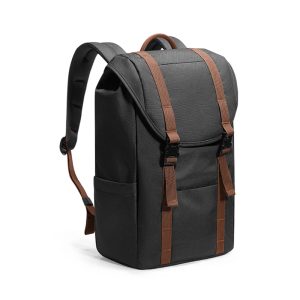
For brand owners and buyers, choosing the right leather texture not only affects the product’s appearance but also directly determines the retail price, target audience, and product lifespan. From a factory perspective, this guide helps you quickly understand the characteristics and suitable bag styles of four mainstream leather textures.
I Why Is Leather Texture the First Step in Product Positioning?
In bag development, leather material cost typically accounts for the majority of total costs, while texture selection is the most intuitive yet most easily overlooked aspect of leather decision-making.
Different textures not only create visual and tactile differences, but also impact:
- Processing difficulty (e.g., Crazy Horse leather demands higher craftsmanship skills)
- Yield rate (certain textures result in different cutting losses)
- Retail pricing range (consumers are willing to pay a premium for specific textures)
- After-sales maintenance costs (affecting brand customer service and user experience)
Choosing the right texture sets the tone for your product. Below, we analyze the four most common textures one by one.
II Detailed Analysis of Four Mainstream Leather Textures
1. Pebble Grain / Litchi Grain
Processing Characteristics
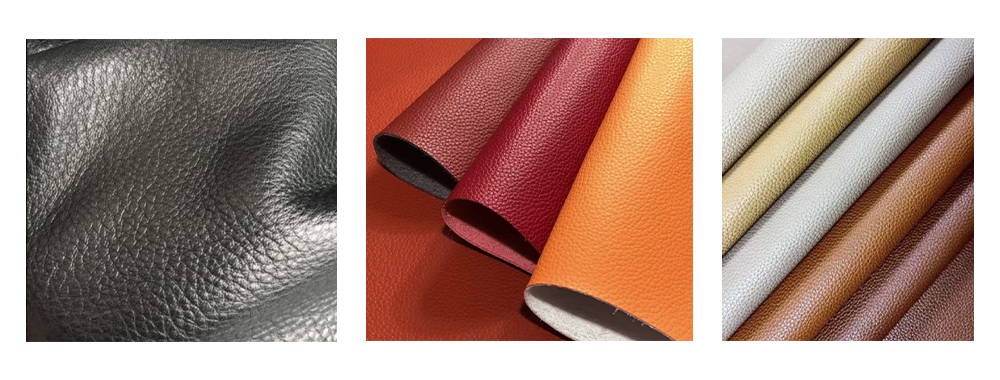
Pebble grain is created by embossing the leather surface to form fine, granular textures resembling lychee skin. It can be made from top-grain cowhide embossing or from split leather with a film coating before embossing, resulting in a wide price range.
Visual & Tactile Feel
- Surface presents uniform, fine granular texture with a semi-matte to matte finish
- Soft and elastic touch with good anti-slip grip
- Grain size can be categorized into “fine pebble” and “coarse pebble” specifications
Suitable Bag Styles
- Classic work bags and tote bags: the understated texture fits workplace settings
- Mid-to-high-end women’s bags: fine pebble grain creates an “affordable luxury” atmosphere
- Daily bags requiring durability: the granular texture helps conceal minor scratches
Pros & Cons Summary
| Pros | Cons |
| Strong ability to conceal natural leather flaws, high yield rate | Low-end pebble grain (split leather pressing) can appear cheap |
| Soft hand feel, suitable for soft-structure bags | Overly uniform texture lacks the uniqueness of natural leather |
| Wear-resistant and scratch-resistant, ideal for high-frequency use | Thick embossing layer may affect leather breathability |
Our Recommendation: If positioning mid-to-high-end, always confirm “top-grain embossing” rather than “split leather film coating.” Top-grain pebble grain will naturally bounce back when pressed, while split leather film coating tends to retain permanent indentations.
2. Saffiano / Crosshatch
Processing Characteristics
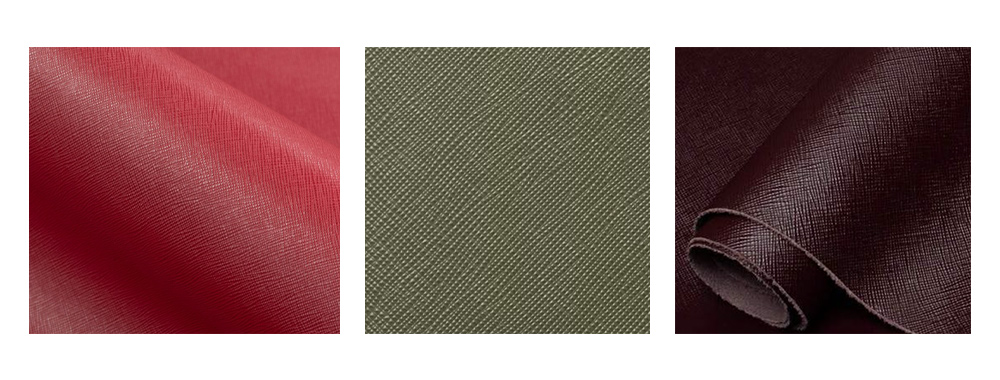
Saffiano originated from classic Italian luxury brand craftsmanship. It involves pressing the leather surface with high-temperature steel plates to create intersecting, fine grid textures, usually coated with resin to form the signature “crosshatch scratch” texture.
Visual & Tactile Feel
- Surface features regular crosshatch texture with gloss ranging from matte to high shine
- Stiff and structured touch, strong shape retention, resistant to deformation
- Coating provides slight water and stain resistance
Suitable Bag Styles
- Structured bags: such as Kelly bags, briefcases, and wallets requiring rigid silhouettes
- Business / affordable luxury positioning: Saffiano carries inherent “refinement” with high consumer recognition
- Small leather goods: card holders, key cases requiring durability and shape retention
Pros & Cons Summary
| Pros | Cons |
| Rigid structure, bag shape maintains its form | Stiff hand feel, not suitable for brands pursuing softness |
| Excellent wear, scratch, and water resistance | Coating process reduces breathability |
| High texture recognition, consumers associate it with “premium quality” | High precision requirements for cutting and stitching, relatively higher loss rate |
Our Recommendation: Saffiano has strict “pattern matching” requirements — seams must align with the texture, otherwise aesthetics are compromised. During development, confirm the cutting layout plan in advance to avoid pattern misalignment during mass production.
3. Smooth / Nappa
Processing Characteristics
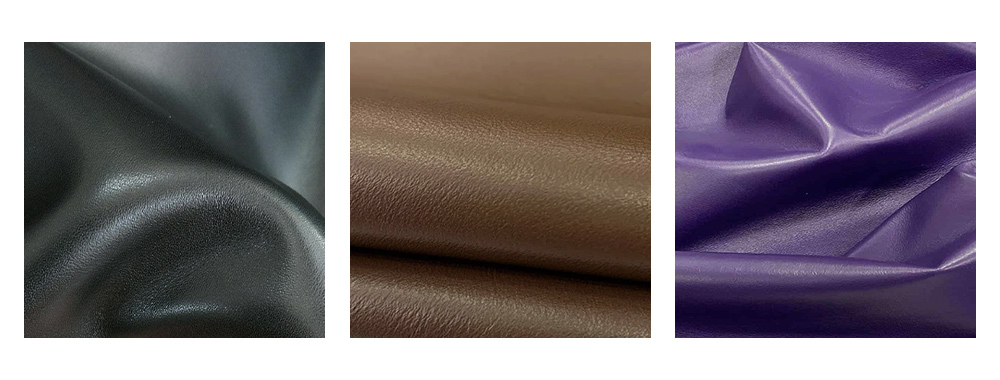
Smooth leather refers to leather with an unembossed surface that retains its natural grain or has undergone light buffing. It is typically made from top-grain cowhide. Nappa leather represents the high-end tier of smooth leather, pursuing ultimate softness and delicacy.
Visual & Tactile Feel
- Smooth and delicate surface that clearly displays the leather’s natural pores and grain
- Soft, warm touch — the most “skin-friendly” feel among the four textures
- Natural luster that develops a unique patina over time
Suitable Bag Styles
- High-end positioning bags: the first choice for brands emphasizing natural materials and craftsmanship
- Minimalist design bags: smooth texture avoids visual distraction, perfect for minimalist aesthetics
- Scenarios requiring natural leather presentation: such as vegetable-tanned leather and aniline leather
Pros & Cons Summary
| Pros | Cons |
| Best showcases natural leather quality and grade | Extremely high requirements for hide quality, costly |
| Soft and comfortable hand feel, excellent user experience | Highly susceptible to scratches, water stains, and fingerprints |
| Develops unique patina over time, collectible value | Brands must provide detailed care instructions |
| Ideal for fine stitching and edge finishing display | Zero tolerance for surface flaws during cutting, high loss rate |
Our Recommendation: The “premium feel” of smooth leather entirely depends on hide quality. For the same smooth leather, the price difference between domestic standard hides and imported full-grain hides can be 3-5x. We recommend clarifying hide source and grade standards during sampling to avoid color or texture discrepancies in mass production.
4. Crazy Horse / Oil-Tanned
Processing Characteristics
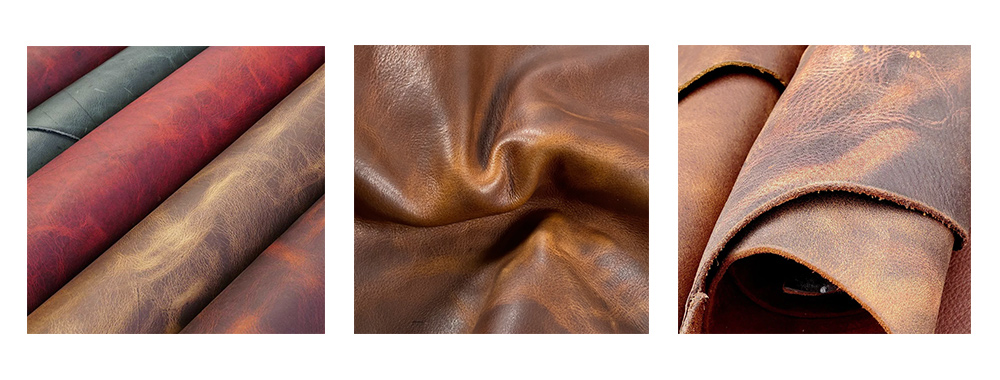
Crazy Horse leather belongs to the oil-tanned leather family. It is made by applying large amounts of oil and wax to the leather surface, followed by special tumbling processes. Its most distinctive feature is the “pull-up effect” — the color lightens when pressure or scratching is applied, then gradually recovers.
Visual & Tactile Feel
- Surface presents a rugged, vintage matte texture with natural color variations and grain diversity
- Oily, substantial touch with a “distressed” sense of history
- Obvious color change marks appear after scratching, but usually self-recover
Suitable Bag Styles
- Vintage, workwear, and Americana style bags
- Men’s briefcases, messenger bags, and travel bags: Crazy Horse’s ruggedness aligns with masculine aesthetics
- Brands emphasizing “better with age” philosophy: ideal for product lines centered on “leather aging”
Pros & Cons Summary
| Pros | Cons |
| Unique pull-up effect, each bag is one-of-a-kind | Difficult to control color consistency, high risk of batch color variation |
| Improves with use, strong user loyalty | Surface oils may seep or transfer under high temperatures |
| High wear and tear resistance, excellent physical strength | High craftsmanship requirements; oil-wax layer easily contaminates sewing machines and workstations |
| Inherent vintage storytelling, strong brand premium potential | Not suitable for consumers seeking refined, clean aesthetics |
Our Recommendation: Crazy Horse leather has two critical control points during production. First, color difference management — we recommend retaining samples from each batch for comparison. Second, cleanliness control — oil and wax easily contaminate cut pieces and workstations, requiring additional cleaning procedures on the production line. Furthermore, Crazy Horse finished products are recommended to be paired with dedicated care oil as a gift, which significantly improves customer satisfaction.
III How to Choose the Right Texture for Your Brand?
Let’s start with a comparison table:
| Your Brand Positioning | Recommended Texture | Key Reason |
| Affordable Luxury / Workplace Commute | Pebble Grain | Soft texture, durable and practical, broad audience appeal |
| Refined Business / Structured Bags | Saffiano | Rigid structure, high recognition, strong premium feel |
| High-End Minimalist / Natural Materials | Smooth (Nappa) | Showcases hide quality, top-tier touch, great for storytelling |
| Vintage Workwear / Male Market | Crazy Horse | Strong differentiation, high user loyalty, excellent premium potential |
Additional Considerations
1. Target Market Climate
- Humid regions (e.g., Southeast Asia): use Crazy Horse leather with caution as oils may seep; Saffiano’s water resistance is advantageous
- Dry regions (e.g., Middle East): Smooth and Pebble Grain leather require moisturizing care
2. Product Usage Frequency
- High-frequency daily bags: prioritize Pebble Grain and Saffiano (durable and easy to maintain)
- Low-frequency styling bags / collectibles: consider Smooth and Crazy Horse (texture prioritized)
3. Your Supply Chain Capabilities
- If your quality control system is still being refined, we recommend starting with Pebble Grain or Saffiano — these two textures have higher tolerance for natural flaws and more stable yield rates.
- If you already have a mature QC team, Smooth and Crazy Horse leather can help you build differentiation in a homogenized market.
IV Conclusion
There is no absolute “good” or “bad” in leather textures — only “suitable” or “unsuitable.” As a factory, we have seen brands suffer from inventory backlog due to poor texture choices, as well as cases where a single bag sold out after the right texture was selected.
Our recommendation is: During the material selection phase, provide at least 2-3 physical samples in different textures for buyers and brand owners to touch and compare. After all, bags are “tactile products,” and no image on a screen can replace the sensation of fingers touching leather.
Need a custom leather solution for your brand? We provide end-to-end services from texture selection, leather sampling, to mass production. Send us your design drafts or reference samples, and we will provide material recommendations and quotations within 48 hours.