Logo Techniqu
In custom bag projects, a logo is not just a visual symbol—it is a crucial carrier of brand value, directly influencing the overall texture of the bag and the first impression it leaves on consumers.
However, many brands fall into a common trap during the selection phase: they finalize the design draft first, and then choose the production technique. In reality, the characteristics of the technique should constrain the design expression. Different logo techniques vary significantly in cost structure, minimum order quantity (MOQ), sample lead time, and material compatibility.
From the perspective of OEM manufacturing, this article systematically breaks down six mainstream logo techniques for leather bags and provides detailed recommendations on choosing the right method for different materials, helping brands make optimal decisions early in the development process.
I. In-Depth Analysis of 6 Main Logo Techniques for Leather Bags
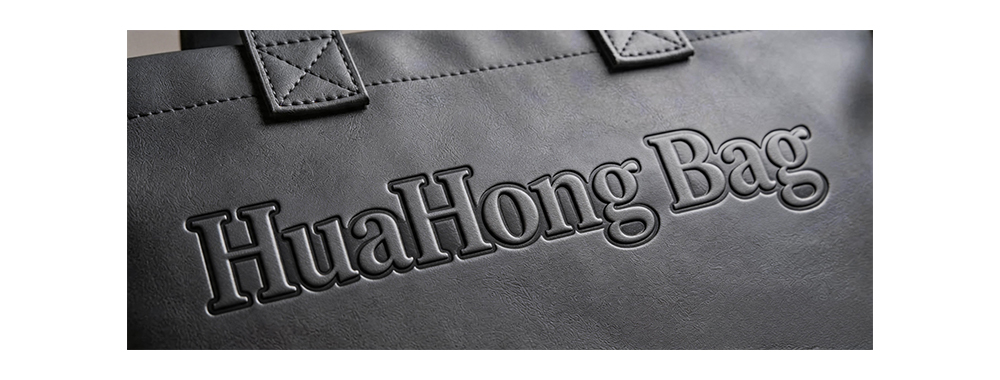
1. Deboss / Emboss
Principle:
This technique uses high-temperature, high-pressure molds to imprint either recessed (deboss) or raised (emboss) patterns on leather or PU surfaces, without the need for additional ink.
| Dimension | Details |
| Core Advantages | Minimalist and premium feel; no color interference; permanent and does not fade; naturally integrates with the leather texture. |
| Limitations | Suitable only for simple-line logos; extremely fine lines (<<0.8mm) may blur on soft leather; lacks color, reducing long-distance recognizability. |
| Typical Applications | Styles that aim for refined elegance rather than bright colors. |
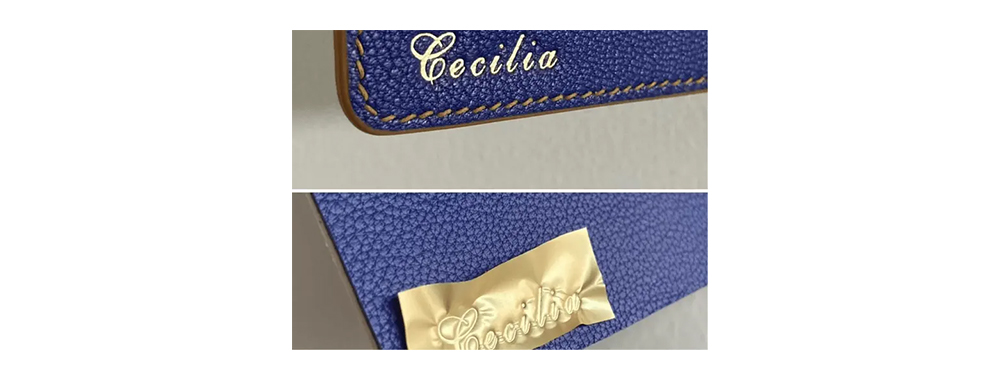
2. Hot Foil Stamping (Gold / Silver Foil)
Principle:
Metal foils (gold, silver, rose gold, holographic, etc.) are transferred onto either debossed recesses or flat surfaces using heat and pressure, creating patterns with mirror-like or matte metallic finishes.
| Dimension | Details |
| Core Advantages | Glossiness is controllable (glossy, matte, pearlescent); can be combined with embossing to create a “hot foil embossed” 3D effect. |
| Limitations | Edge clarity can be affected by the leather’s texture; raised foil may develop micro-cracks in frequently bent areas over long-term use. |
| Typical Applications | Ideal for brands that want to emphasize the metallic quality of their logo and enhance a refined, premium feel. |
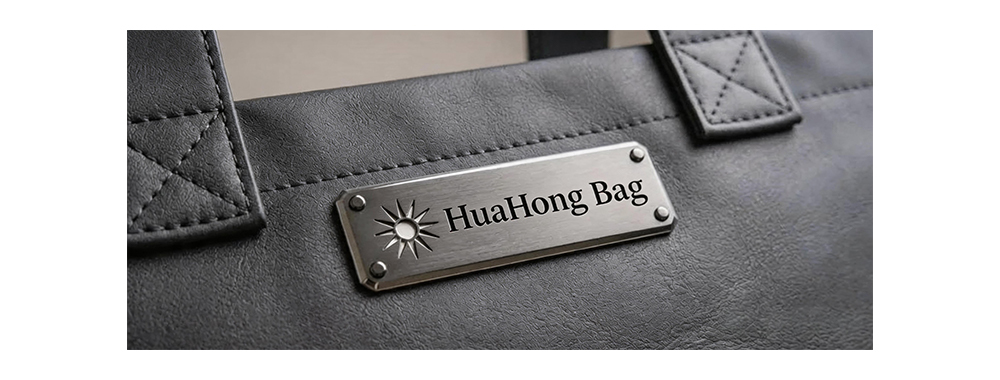
3. Metal Label
Principle:
Independent labels made from zinc alloy, copper, or stainless steel are produced through processes such as die-casting, polishing, electroplating, laser engraving, or silk-screen coloring, and then attached to the bag via stitching or rivets.
| Dimension | Details |
| Core Advantages | Extremely premium appearance; permanent and highly durable; electroplating allows finishes in gold, silver, gunmetal, rose gold, etc. |
| Limitations | Highest unit cost; adds weight to the bag; rivet attachment points may loosen with long-term use. |
| Typical Applications | Designer collections and high-value bags. |
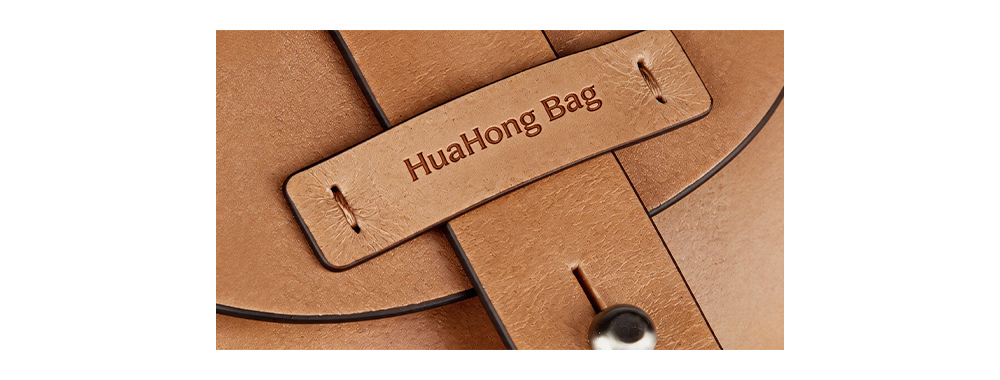
4. Leather Patch
Principle:
Small pieces of genuine or synthetic leather are cut and can incorporate embossing, silk-screen printing, or hot foil stamping. They are then attached to the bag via stitching or rivets.
| Dimension | Details |
| Core Advantages | Material matches the bag, creating a cohesive style (especially for leather goods); warm and tactile feel; allows for playful color-blocking or contrast stitching. |
| Limitations | Requires additional stitching or riveting, adding an extra production step; genuine leather may have batch-to-batch color variation. |
| Typical Applications | Vintage, casual, and outdoor-style bags. |
5. Laser Engraving
Principle:
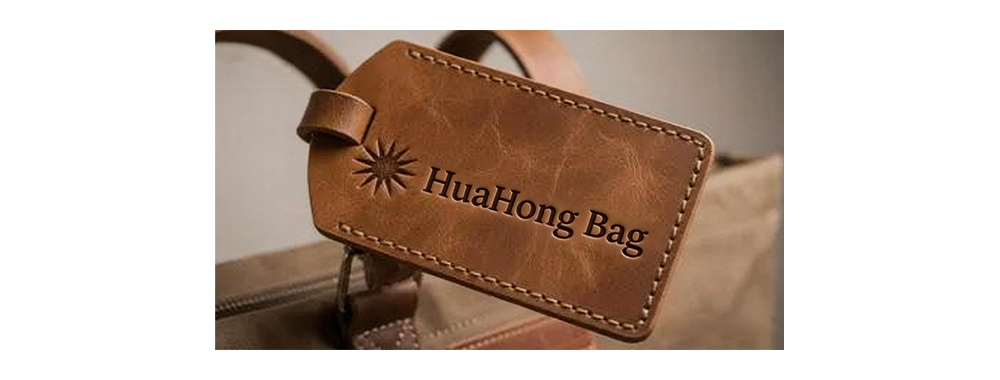
A high-powered laser beam burns the surface of the material, creating a permanent mark through vaporization or carbonization. The process is contactless and requires no consumables.
| Dimension | Details |
| Core Advantages | Extremely precise (up to 0.1mm); eco-friendly with no consumables; permanent and tamper-proof. |
| Limitations | Limited to single color (material’s natural color); low contrast on dark materials; some materials may char at the edges after engraving. |
| Typical Applications | Clear, permanent, and detail-rich markings. |
6. Embroidery on Leather
Principle:
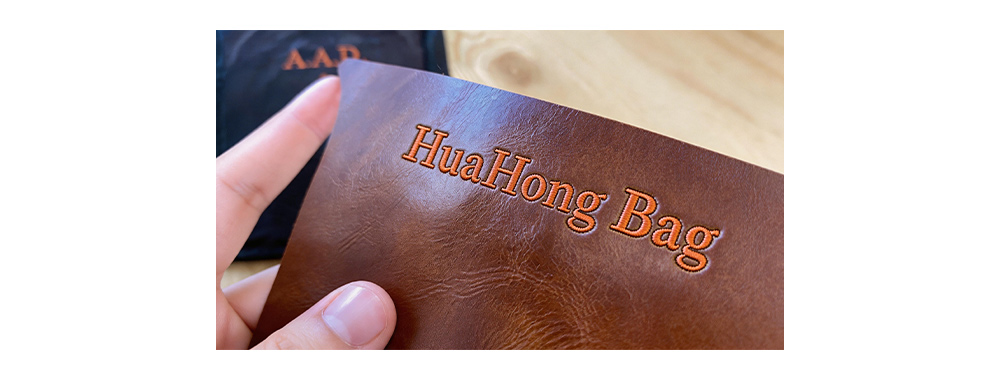
Embroidery on leather is achieved by stitching threads directly through the leather surface using specialized embroidery techniques, typically satin stitch or tatami stitch. The process requires leather-specific needles and carefully adjusted thread tension to prevent damage to the material.
| Dimension | Details |
| Core Advantages | Creates a strong three-dimensional effect and handcrafted aesthetic; delivers a bespoke, luxury appearance on genuine leather. |
| Limitations | A high-risk technique, as needle perforations compromise the integrity of the leather. Over time, repeated stress may cause tearing along stitch holes. Suitable only for firm, structured leathers such as vegetable-tanned leather and thick cowhide; soft leathers are prone to wrinkling after embroidery. Extremely fine lines and intricate details cannot be accurately reproduced. |
| Material Compatibility | Firm genuine leathers, including vegetable-tanned leather and saddle leather. |
| Typical Applications | Ideal for high-end, niche, and custom-made handbags that emphasize craftsmanship and exclusivity. |
II. Material–Technique Compatibility Guide
| Material Type | Recommended Technique | Alternative Technique | Techniques to Avoid |
| Full-Grain Cowhide (Soft) | Debossing/Embossing, Hot Foil Stamping, Leather Patch | Metal Label, Laser Engraving | Embroidery (high risk) |
| Full-Grain Cowhide (Firm / Vegetable-Tanned) | Debossing/Embossing, Hot Foil Stamping, Metal Label | Leather Patch, Embroidery | None |
| Split Leather / Coated Leather | Debossing/Embossing, Hot Foil Stamping | Leather Patch | Laser Engraving (coating layer may obstruct engraving results) |
| PU Leather (Soft) | Debossing/Embossing, Hot Foil Stamping | Leather Patch, Metal Label | Embroidery |
| PU Leather (Firm) | Debossing/Embossing, Hot Foil Stamping, Laser Engraving | Metal Label | None |
| PVC | Debossing/Embossing, Metal Label | Hot Foil Stamping | Laser Engraving (may release hazardous gases), Embroidery |
III. Common Manufacturing Misconceptions & Risk Prevention Guide
Misconception 1: “Design first, then choose the technique”
Reality:
Design should serve the manufacturing process. Many brands approve a design simply because the mock-up looks good, only to discover during mass production that the intended visual effect cannot be reproduced due to technical limitations. This often leads to last-minute design changes, extended lead times, and additional costs.
Recommendation:
Involve the manufacturer during the early concept stage to conduct Design for Manufacturability (DFM) reviews. Move technical constraints upstream into the design phase and validate feasibility through early sampling.
Misconception 2: “If the sample looks good, mass production will be the same”
Reality:
Samples are typically made by highly skilled technicians under controlled conditions, while bulk production relies on standardized production lines. The “perfect result” achieved in sampling may degrade in mass production due to machine tolerances, operator variation, or material batch inconsistencies.
Recommendation:
Request a Pre-Production Sample (PPS) made using the exact same materials, machines, and production parameters as mass production to ensure realistic validation.
Misconception 3: “Logo technique only matters in appearance, not durability”
Reality:
Different logo techniques vary significantly in resistance to washing, abrasion, heat, and light exposure. A visually appealing logo may fail quickly if durability is not considered at the design stage.
Recommendation:
Evaluate durability requirements based on the bag’s real usage scenarios, and conduct abrasion, flexing, or aging tests in coordination with the manufacturer when necessary.
We Offer Custom Logo Services
As a professional OEM and ODM bag manufacturer, we provide comprehensive custom logo solutions, including:
- Free logo feasibility evaluation
- Free mock-up development
- Free pre-production samples
- One-on-one technical consultation for optimal process selection
- Consistent quality control for mass production